
Companionship so the day has someone in it
Conversation, company and someone reliable in the house — for people who are managing fine, but managing alone.
Free, no obligation. We'll tell you honestly what we'd recommend — including if that's nothing yet.
What's included
A care plan is built around what your loved one actually needs — this is the range it's drawn from.
- Conversation and company
- Cards, puzzles, crosswords and games
- Walks and time outdoors
- Trips out — shops, library, coffee, church
- Help with letters, photos and phone calls to family
- Company at mealtimes
- Being in the house while family are at work
- A regular check that things are as they should be
Loneliness is not a soft problem
For older adults living alone, sustained isolation tracks with faster decline in memory and mood, worse physical health, and higher risk of the kind of hospital admission that changes everything.
It is also the need families most often tell us they underestimated. The practical things get noticed — the shopping, the cleaning, the driving. That someone has not had a real conversation in four days does not show up on any list.
What actually happens on a visit
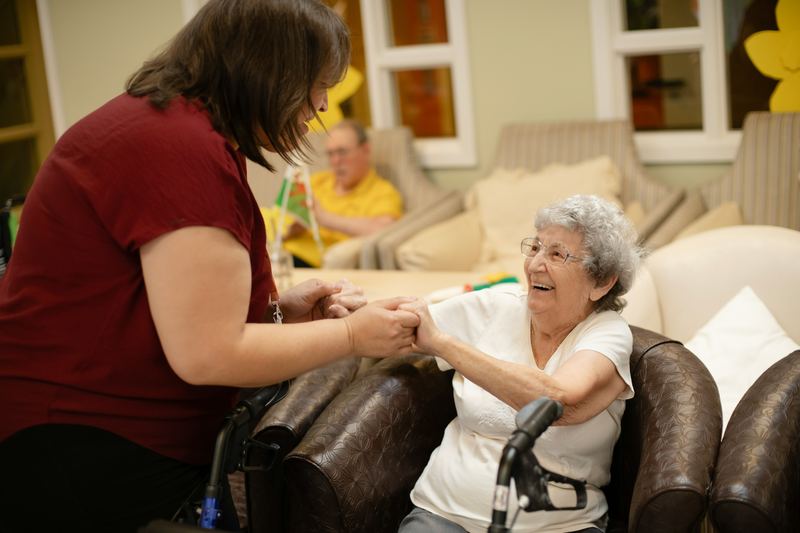
Whatever your loved one wants to happen. Some visits are a pot of tea and two hours of talking. Some are a walk, a game of cards, or a drive somewhere they used to go often and have not been in a year.
We build visits around what the person actually enjoys rather than a set activity list. The point is that it feels like company, because that is what it is.
A second pair of eyes, quietly
Companionship visits are also how a lot of problems get caught early. A caregiver seeing someone every week notices what a monthly phone call does not — eating less, sleeping badly, unsteady on their feet, quieter than usual, or a bruise nobody mentioned.
We tell you what we notice. Not as a report card on your parent, but because early notice is very often the difference between an adjustment and a crisis.
Who this is for
Someone living independently who is alone most of the day — or a family carer who needs dependable hours away without worrying.
How it starts
You call, or ask us to call you
Tell us what's been happening. There's no script and nothing to prepare.
We visit, at no cost
We come to the home, meet your loved one, and work out what would actually help.
Care starts
Usually within days. We start small, and adjust as you learn what's working.
Talk to someone about companionship
Call and you'll speak to a person who knows the service, not a call center. If it's easier to write it down, the consultation form works too.
(651) 350-0999Or request a consultation online — we reply within one business day.